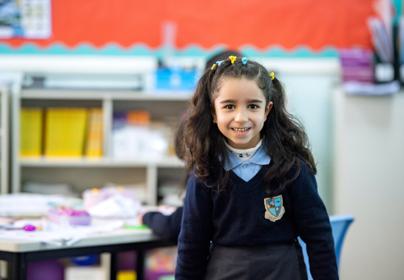
Learning to read is one of the most important skills children develop during their Primary years, and phonics plays a vital role in building the foundations for successful reading and writing.
Phonics teaches children to recognise the relationship between letters and the sounds they represent. Rather than simply memorising whole words, children learn to identify individual sounds, blend these sounds together to read words, and segment words into sounds to support their spelling. As their phonics knowledge grows, children become increasingly confident and independent when encountering unfamiliar words.
At Britannica, we use Letters and Sounds to provide a structured and progressive approach to teaching phonics. Children build their phonics knowledge step by step, beginning with listening to and identifying sounds before progressing to recognising letter-sound correspondences, blending sounds to read words and segmenting words for spelling.
Phonics teaching is systematic and progressive, meaning that children build upon previously learned sounds and skills as they move through Primary. Regular opportunities to revisit and practise prior learning help children develop fluency and confidence.
Phonics does not only happen during a dedicated phonics lesson. Children are encouraged to apply their phonics knowledge throughout the school day, particularly during reading and writing activities. Teachers model how phonics can be used as a strategy when children encounter unfamiliar words or are unsure how to spell a word.
As children become increasingly secure readers, the emphasis gradually moves towards developing reading fluency, vocabulary and comprehension, while phonics continues to provide valuable support when decoding unfamiliar words.
We also recognise the important role that parents play in supporting early reading at home. As part of our Primary Parent Workshop Series, we offered a Phonics Workshop. This session was aimed particularly at parents of children in EYFS, Key Stage 1 and EAL learners. The workshop explained how phonics is taught in school, introduce key terminology, demonstrate classroom strategies, and share practical ways parents can help their children practise phonics at home.
Most importantly, we want children to see reading as something enjoyable, meaningful and exciting. By working together at school and at home, we can help our children develop the confidence and skills they need to become enthusiastic, lifelong readers.