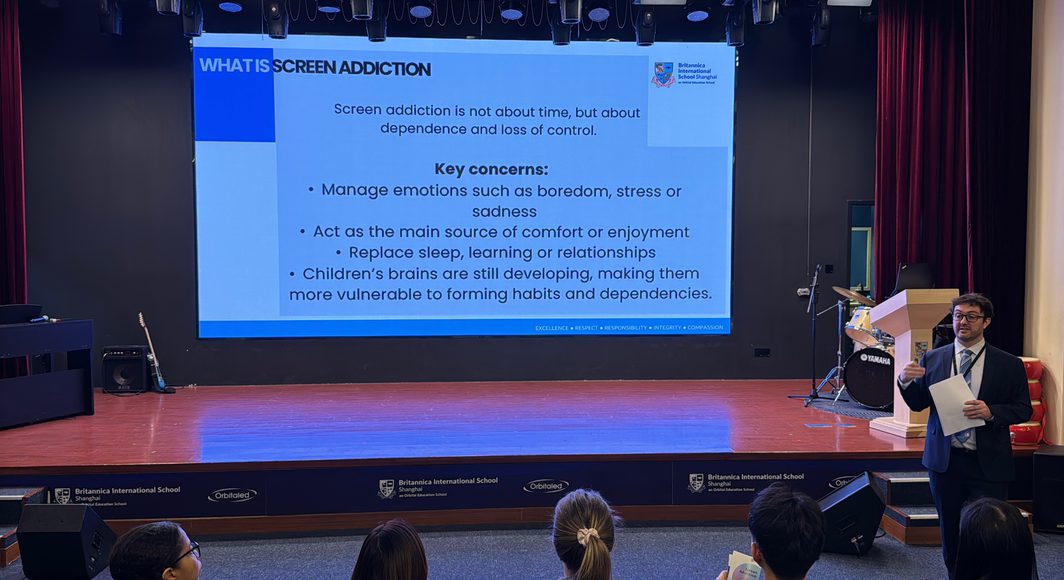
Last week, our school held an informative workshop for primary parents focusing on the growing concern of screen reliance in children. As technology becomes increasingly woven into everyday life, understanding how our children use screens is essential in helping them develop healthy, balanced habits.
While screen addiction is not a formal medical diagnosis for children, early reliance on screens can promote unhealthy patterns of use. The key issue is not simply how long children are on screens, but how and why they are using them. Screens can be powerful tools for learning, creativity, and connection but when they become a coping method or replacement for real-world experiences, challenges can arise. Parents and caregivers play a vital role in guiding children towards responsible, healthy screen use so that technology supports their learning and wellbeing rather than replacing play, relationships, and rest.
Key Points from the Workshop
Screen addiction refers to an unhealthy dependence on screens, where devices become a main way for children to cope with boredom, emotions, or stress. It can impact a child’s learning, behaviour, and emotional wellbeing.
Some early signs of unhealthy screen use can show up physically, emotionally, socially, and behaviourally. Parents may notice increased anxiety, shorter attention spans and reduced patience, tiredness or difficulty concentrating, or a reduced interest in social interaction and play.
Creating Healthy Habits
There is no single “perfect” amount of screen time for children. What matters most is that screen use is purposeful, balanced, and does not replace real-life experiences such as play, creativity, family time, and rest.
- Early Years: short, active/educational sessions (10–15 minutes), up to ~45 minutes daily alongside lots of play.
- KS1: up to ~90 minutes daily, focused on problem-solving, creativity and practice.
- KS2: up to ~120 minutes daily, mixing educational, creative and leisure use while learning self-management.
Across all ages, screens should have a clear purpose and not become a default filler for time, boredom, or emotions.
Practical Tips for Home
- Set clear, predictable routines and stick to them
- Use physical timers rather than verbal warnings
- Keep screens out of bedrooms
- Create daily screen-free time, backed up with other activities
- Replace screens, don’t just remove them
- Reduce or increase screen time gradually
- Stay calm and consistent (even when your child is not)
- Watch what children are using, not just how long
- Use parental controls guilt-free
- Model the behaviour you want to see
- Encourage open conversations about games, apps, and the internet
- Praise positive choices (rewards should not be more screen time)
- Prioritise sleep and device-free time for at least 90 minutes before bed
- Work as a family and link up with your child’s friends’ parents
- Seek support if concerns persist
Tips for Parents
- Keep communication open and judgement-free
- Talk regularly about what your child enjoys online and join in! Play the games together, create content together and treat is as any other family activity in your parenting toolkit.
- Help children reflect on how screens make them feel
- Model balanced screen habits yourself
- Use family safety and parental control tools to support healthy boundaries such as Microsoft Family Safety, Google Link and Apple Screen Time & Family Sharing
Resources for Further Support
Trusted sources for further information and practical guidance with free parent and educator portals full of brilliant resources:
For further research and reading:
- World Health Organization (WHO)
- Ofcom
If you have any concerns about your child’s screen use, please remember you’re not alone. Every family finds this challenging at times, and it’s okay to ask for advice or support. Small changes can make a big difference.
Martin Powell
Year 5C Teacher