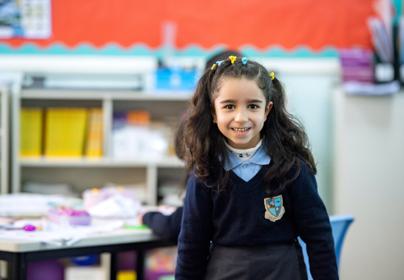
Building friendships and developing confidence is something we continuously nurture as part of everyday life in the classroom at Britannica. Within the EYFS curriculum, personal, social and emotional development is a prime area of learning and forms the foundation for children’s wellbeing, confidence, and ability to learn successfully.
Each day, the children are supported in developing early friendship skills through their play, interactions, and shared experiences. Whether they are working together to build a structure, engaging in imaginative role-play, or exploring resources side by side, they are learning how to share, take turns, listen to one another, and respect different ideas. These ongoing experiences help children understand how to cooperate, solve problems, and develop positive relationships with their peers.
We consistently encourage the children to use language to express their needs and feelings. Phrases such as “Can I join in?”, “My turn next please”, or “I didn’t like that” are modelled and supported, helping children to communicate clearly and kindly. Over time, this builds their confidence in social situations and helps them manage small conflicts in a positive and respectful way.
In line with the Curiosity Approach, our learning environments are thoughtfully designed to promote calm, meaningful interactions. The use of open-ended resources, natural materials, and inviting, homely spaces encourages children to play collaboratively and engage in sustained shared thinking. These opportunities allow friendships to develop naturally, as children explore, negotiate, and include one another in their play.
Story times, circle discussions, and role-play continue to support this area of development. Through stories about friendship and kindness, children learn to recognise emotions, understand how their actions affect others, and develop empathy. Activities such as using puppets or acting out simple scenarios give children a safe space to practise being kind, helpful, and inclusive.
At Britannica, we recognise that these skills are not taught in isolation but are built gradually through consistent support, modelling, and everyday experiences. Learning how to form positive relationships is just as important as developing early literacy and numeracy skills, and it plays a vital role in helping children become confident, resilient, and happy learners.
Alongside this ongoing focus, each class has enjoyed a range of learning experiences this week.

In Pre-Nursery, the children became astronauts and zoomed to the moon, inspired by the story Roaring Rockets and the song “Zoom Zoom Zoom, We’re Going to the Moon.” The children used countdowns, star counting, and movement games to build early number skills and develop their gross motor control. They also enjoyed painting their own rocket ships and flying them around the classroom through imaginative play.
In Nursery, the children have been exploring the wonders of spring as part of our topic The Great Outdoors. We went on a walk to observe the cherry blossom trees in full bloom, and the children were excited to look closely at the flowers and talk about the changes they can see in the environment. Inspired by what we saw, the children created their own cherry blossom artwork by dipping strings into paint to make tree branches and adding blossoms to complete their pictures. We also shared the story Tiny and New, which follows different baby animals as they discover the world around them, helping the children think about growth, change, and new beginnings.
In Reception, the story The Wind in the Willows sparked our discussions about spring and the changes that happen in the world around us. The children talked about what they have noticed outside, how the weather feels different, and how spring makes us feel. We are looking forward to continuing our observations as the season changes. In mathematics, the children have been consolidating their number bonds to 10, exploring different ways to make 10 and looking at the composition of numbers. In phonics, we have been practising reading and writing our tricky words, building confidence in both reading and early writing.