Spanish lessons at Britannica continue to be a lively journey filled with language, culture, and creativity. From discovering curious traditions, such as Spain’s famously late dinner times or the beloved Ratón Pérez, to using Spanish confidently in class, our students are developing both linguistic skills and cultural awareness in meaningful ways.
Spanish is one of the world’s most widely spoken languages, used across three continents and by hundreds of millions of people every day. As the second most spoken language by native speakers globally, it plays an important role in international communication. At Britannica, we believe that learning Spanish equips our students with a valuable life skill while also broadening their understanding of the world around them.
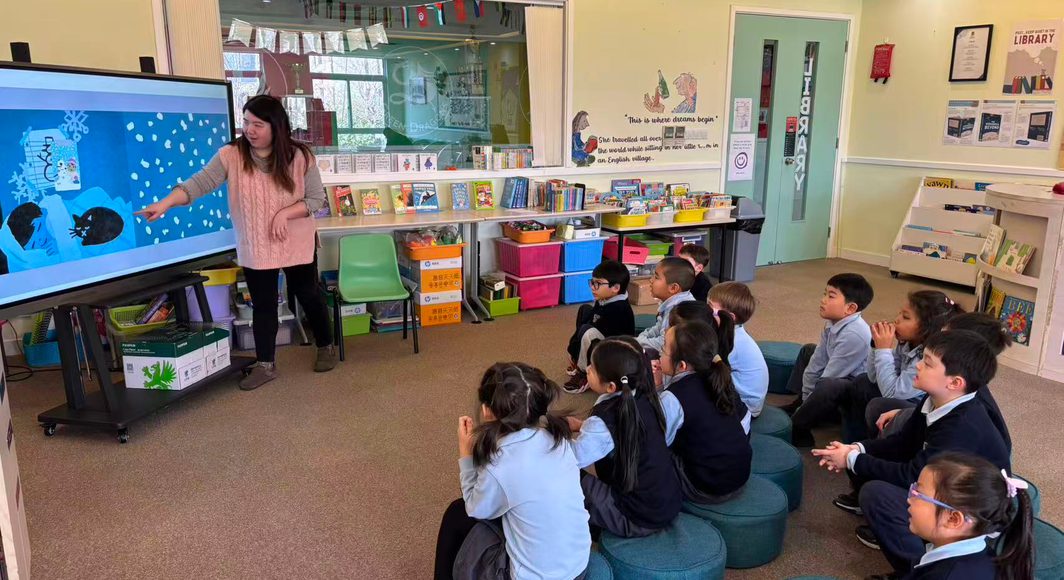
Our lessons focus on practical communication, encouraging students to listen, speak, and interact in Spanish as much as possible. Through a combination of structured learning and playful activities, we aim to nurture confidence, curiosity, and a positive attitude towards language learning.
In Year 3, students take their first steps into Spanish by learning how to greet others, introduce themselves, and explore basic vocabulary in a fun and memorable way. Singing songs such as “Buenos días” helps reinforce pronunciation, while creative activities—like designing and labelling imaginative monsters, allow students to practise new language through art. This term, we will continue to explore cultural aspects of Spanish-speaking countries, including art and food, and we are excited about planned visits to a Spanish restaurant, a museum, and a Spanish-language film screening.
In Year 4, there is a strong focus on developing accurate pronunciation and confidence in speaking. Students practise Spanish sounds and the alphabet and take part in short role plays to use language in context. Learning about cities has been a highlight, with students creating detailed posters of their own imagined cities, now displayed in our corridor. Alongside this, they have consolidated their understanding of numbers and can now count confidently up to 100 in Spanish, something they particularly enjoy practising through games like Bingo.
In Year 5, students begin the year by revisiting prior knowledge and showcasing their learning through posters about themselves and their hobbies. Their ability to recall vocabulary and sentence structures from previous years has been impressive. Lessons then move on to topics such as animals, family, and daily life, with plenty of opportunities for speaking and peer interaction. More recently, students have started learning about jobs and future aspirations, while also developing a deeper understanding of grammatical gender and how it affects word endings. A particularly enjoyable moment for Year 5 is when students become “mini teachers,” confidently leading parts of the lesson themselves.
Across all year groups, lessons are enriched with games, stories, songs, short cartoons, and creative projects. These activities support memory, reinforce grammar and vocabulary, and encourage collaboration. Many students thrive during revision games and enjoy the challenge of friendly competition.
Music is an essential part of our Spanish programme. Songs help students internalise new language and improve pronunciation, and it is always rewarding to hear students using Spanish naturally around the school, especially our younger learners singing greetings with confidence.
One of our upcoming highlights in Year 3 is a collaborative storytelling project titled Mi mundo de colores, inspired by an episode of Pocoyó. This project combines language learning with creativity and cultural exploration, giving students a meaningful context in which to use Spanish.
At Britannica, Spanish is more than a subject, it is a bridge to other cultures. Learning alongside Spanish-speaking teachers in a multicultural environment allows students to experience the language authentically and prepares them to engage with a global community.
Seeing students’ enthusiasm, growing confidence, and willingness to use Spanish beyond the classroom continues to be the most rewarding part of teaching. This excitement is what keeps language learning alive and meaningful.
We encourage you to ask your child to share some of the Spanish words, phrases, or songs they have been learning, it is a wonderful way to support their progress.
¡Hasta pronto!
Miss Marín
Spanish Teacher