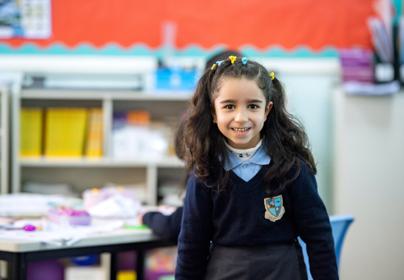
At Britannica, we believe that art plays a vital role in early childhood development, encouraging our young children to express themselves, develop critical thinking skills, and foster meaningful social connections. From the earliest years, creative exploration provides children with a safe and joyful space to discover who they are, how they feel, and how they relate to the world around them.
Engaging in hands-on artistic activities not only enhances fine motor skills but also stimulates rich sensory experiences, making learning more interactive, immersive, and enjoyable. Activities such as drawing, painting, constructing with recycled and natural materials, sculpting, and crafting allow children to experiment with textures, colours, and forms. Through these experiences, they learn to manipulate tools and resources with increasing confidence, strengthening coordination, control, and dexterity while delighting in the creative process. This practical, exploratory approach lays a strong foundation for future academic learning, problem-solving, and self-expression.
Beyond physical development, art nurtures curiosity, imagination, and independent thinking. When children are invited to make choices about colours, shapes, and materials, they begin to understand that their ideas are valued. They learn that there is more than one way to approach a task and that creativity thrives through experimentation and persistence. These early experiences cultivate resilience, adaptability, and a willingness to embrace challenges—qualities that are essential for lifelong learning.
Creativity also serves as a powerful medium for communication. Young children often express complex emotions and ideas more freely through images, movement, and creative construction than through words alone. By sharing their artwork and creative stories, they learn to listen to others, appreciate different perspectives, and build empathy. This non-verbal communication is invaluable, helping children connect with one another on a deeper level and reinforcing the social bonds that are crucial for their emotional well-being. As Albert Einstein famously said, “Creativity is intelligence having fun.” By fostering this spirit of creativity through play, practical experiences, and collaborative opportunities, we empower children to think critically and approach challenges with confidence and joy.
At Britannica, art is thoughtfully woven into everyday learning. Our classrooms provide inviting creative spaces filled with diverse materials that inspire exploration and imagination. Teachers guide children through open-ended experiences rather than fixed outcomes, encouraging reflection, conversation, and pride in their efforts. Celebrating each child’s unique creative voice helps build self-esteem and a genuine love for learning that extends far beyond the art table.
Our focus on art not only supports the holistic growth of young children—physically, socially, emotionally, and cognitively—but also enriches their entire educational journey. By nurturing creativity from the earliest years, we prepare our students to become curious thinkers, compassionate collaborators, and confident innovators. Through this ongoing commitment, we aim to cultivate a generation of imaginative individuals who are ready to explore possibilities, embrace diversity, and leave their positive mark on the world.


Reception has had a fun and engaging week learning about Chinese New Year. The children enjoyed a range of creative craft activities and began a collaborative art project, working together to decorate a horse while discussing colour choices, shapes, and patterns. They also took part in a lively dragon dance, fully embracing the excitement, fun, and festivities of the Chinese New Year celebrations.
We read and listened to a variety of Chinese New Year stories, helping the children learn about the traditions and celebrations connected to the Lunar New Year. In mathematics, the children revised and consolidated addition and practiced counting beyond 10 through practical activities and games.
To conclude the week, we celebrated with a small class party, coming together to share snacks and enjoy some special treats, embracing the spirit of togetherness at the heart of Lunar New Year.
This week in Nursery, the children have greatly enjoyed continuing to read “Can’t You Sleep, Little Bear?”, showing wonderful engagement with this warm and comforting story. We also explored enchanting Chinese New Year stories, learning about the traditions of this joyful festival and how it is celebrated around the world.
The creative area was full of excitement as the children made beautiful collaged hearts for Valentine’s Day and decorated vibrant lanterns and colourful horses for Chinese New Year. A highlight of the week was taking part in a lively dragon dance and trying the drums, creating a joyful and memorable cultural celebration for everyone.
This week in Pre-Nursery, the children continued exploring Chinese New Year traditions by reading Dragons in the City and discussing traditional dragon dances. They completed a range of Chinese New Year art projects that focused on developing fine motor skills while exploring the symbolic colours of red and gold.
The celebrations continued during Mandarin class, where the children enjoyed making dumplings and proudly took part in a dragon dance of their own. Overall, it has been a fun, festive, and celebratory week filled with creativity, cultural learning, and joyful shared experiences.
Derek Walker
Head of Art